


 Garantía de entrega





Artículo: AMZ-B08YRZN1V5
Wekiva Foliage
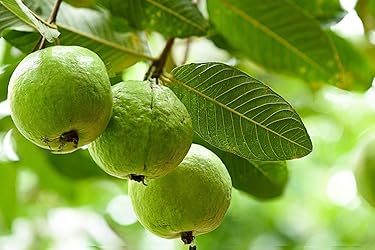
Ruby Supreme Guava Tree - Live Tree in a 3 Gallon Pot - Psidium Guajava 'Ruby Supreme' - Edible Fruit Bearing Tree for Gardens and Patios
Detalles del producto
Disponibilidad
En stock
En stock
Peso con empaque
1.00 kg
1.00 kg
Devolución
Si
Si
Condición
Nuevo
Nuevo
Producto de
Amazon
Amazon
Viaja desde
USA
USA
Sobre este producto
- Guava fruit trees are not a common sight in North America and need a decidedly tropical habitat. In the United States, they are found in Hawaii, the Virgin Islands, Florida and a few sheltered areas in California and Texas. Guava trees are attractive and produce deliciously rich, sweet fruits that are excellent fresh or in desserts. Given enough guava tree information, it is possible to grow these small trees in a greenhouse or sunroom and reap the benefits of their Vitamin C-rich fruits. The guava fruit grows on a small tree with a wide, short canopy and a sturdy single to multi-stemmed trunk. The guava tree is an interesting plant with mottled greenish bark and long 3- to 7-inch (7.5 to 18 cm.) serrated leaves. Guava trees produce white, 1-inch (2.5 cm.) flowers that yield to small round, oval or pear shaped fruits. These are more accurately berries with soft flesh, which may be white, pink, yellow or even red, and which varies in taste from acidic, sour to sweet, and rich depending on variety. Guava fruit trees are tropical to sub-tropical and may achieve 20 feet (6 M.) in height. Growing guavas requires cold protection, and is not suitable outdoors in most zones of the United States. They must have shelter from freezing winds, even in sunny warm climates where occasional icy temperatures occur.

Producto prohibido
Este producto no está disponible
Este producto viaja
de USA ![]() a tus manos en
a tus manos en
![]()
 a tus manos en

Conocé más detalles
Guava fruit trees are not a common sight in North America and need a decidedly tropical habitat. In the United States, they are found in Hawaii, the Virgin Islands, Florida and a few sheltered areas in California and Texas. Guava trees are attractive and produce deliciously rich, sweet fruits that are excellent fresh or in desserts. Given enough guava tree information, it is possible to grow these small trees in a greenhouse or sunroom and reap the benefits of their Vitamin C-rich fruits. The guava fruit grows on a small tree with a wide, short canopy and a sturdy single to multi-stemmed trunk. The guava tree is an interesting plant with mottled greenish bark and long 3- to 7-inch (7.5 to 18 cm.) serrated leaves. Guava trees produce white, 1-inch (2.5 cm.) flowers that yield to small round, oval or pear shaped fruits. These are more accurately berries with soft flesh, which may be white, pink, yellow or even red, and which varies in taste from acidic, sour to sweet, and rich depending on variety. Guava fruit trees are tropical to sub-tropical and may achieve 20 feet (6 M.) in height. Growing guavas requires cold protection, and is not suitable outdoors in most zones of the United States. They must have shelter from freezing winds, even in sunny warm climates where occasional icy temperatures occur.
Compra protegida
Disfruta de una experiencia de compra segura y confiable
![]() Garantía de entrega
Garantía de entrega
Con Tiendamia todas tus compras cuentan con Garantía de Entrega o devolución total de tu dinero.
Compras 100% seguras y garantizadas, para que pidas lo que sueñas y lo recibas del mundo a tu puerta.
Tarjetas de Débito y Crédito
Pagando en Colones ( ₡ )

Visa

Mastercard

American Express
Pagos a través de PayPal
Compra procesada en dólares con dinero en cuenta o tarjetas internacionales.

PayPal

 Garantía de entrega